Panel-Level Protection Before the Next Voltage Spike
Whole-home surge protection in San Diego for properties running modern electronics on panels not designed for today's electrical loads
Panels installed in San Diego homes built before the 1990s were sized and configured for the appliance loads of their era—not for simultaneous EV chargers, home-office servers, smart appliances, and HVAC systems drawing from the same service entrance. That mismatch is what makes voltage spikes disproportionately damaging on older systems: the panel itself was never designed to condition or buffer the incoming power. Dorado Electrical Solutions approaches every surge protection installation by reviewing the panel and service entrance first, so the device recommended matches the actual electrical system rather than a shelf-standard option.
The owner, a licensed electrician with 19 years of hands-on field experience, performs that panel review on the same visit as the installation. Whole-home surge protection is installed at the main panel, and the owner checks available space in the panel and the condition of the breakers before selecting the correct device size. Depending on what is found, point-of-use protectors for sensitive electronics may also be worth adding—the on-site review determines whether the panel-level unit alone is sufficient or whether a layered approach makes more sense for your setup.
Request a free estimate and panel review to determine which surge protection configuration fits your home's current electrical system.
Whole-home surge protection devices are installed in the panel at the service entrance, where they clamp excess voltage before it can travel through branch circuits to outlets and connected equipment. Device sizing is determined by the incoming service amperage and the number of circuits in the panel, which is why an accurate on-site review matters. Installing an undersized unit on a 200-amp service with a full panel leaves meaningful exposure, particularly in homes in North Park or Kearny Mesa where older panels are common and the load profile has grown significantly since the original installation.
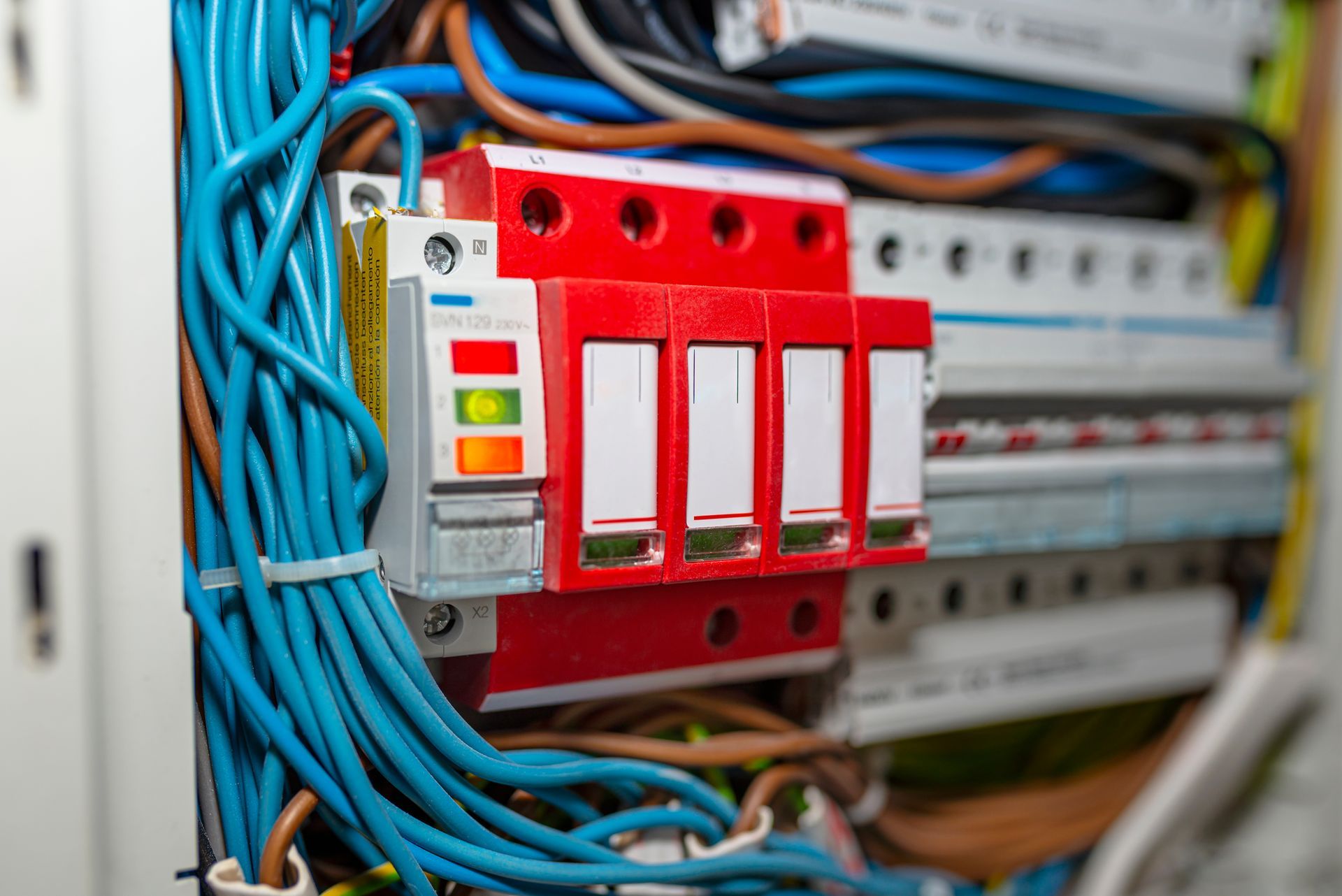
After installation, the most visible change is the device itself mounted at the panel—but the functional outcome is that connected appliances and electronics are no longer exposed to voltage events that travel through the utility feed. Dorado Electrical Solutions completes each installation with a confirmation that the device is properly bonded and that the indicator light signals active protection, which gives you a clear reference point for checking that the unit is functioning going forward.
Whole-home protection handles the surge events that power strips cannot catch—those originating from the utility line or from large motor loads cycling inside the house, such as central AC compressors or pool pump motors. Point-of-use protectors handle smaller transients at the device level. Whether you need one layer or both is a decision made after reviewing your panel, not before arriving on site.
Answers About How Surge Protection Works
These questions address how whole-home surge protection is installed, what it covers, and how to assess whether your current setup actually protects what you have connected.
What is the difference between a whole-home surge protector and a power strip with surge suppression?
A whole-home device is installed at the main panel and intercepts voltage events before they reach any outlet in the house. A power strip suppressor only protects what is plugged into that strip and does not address surges entering through the panel or traveling between circuits.
How is the surge protection device physically installed at the panel?
The device connects directly to a dedicated double-pole breaker in the main panel, with leads bonded to the panel's neutral and ground bars. The owner checks that available breaker space exists before selecting the unit, since the installation requires a specific slot configuration.
Why are older San Diego homes at greater risk from voltage spikes?
Panels installed in homes from the 1960s through 1980s were designed for lower aggregate loads, and their components—bus bars, breaker connections, and service entrance conductors—can amplify the effect of a voltage transient rather than dissipate it cleanly the way a modern panel does.
What should you look for to confirm the surge protector is working after installation?
Most panel-mounted devices include an indicator light that shows active protection status. A light that goes dark or changes color signals that the unit has absorbed a significant event and may need replacement—knowing where that indicator is and what it looks like gives you a monitoring point without any special equipment.
When is it worth adding point-of-use protectors alongside the panel-level device?
If you have audio equipment, a home server, or medical devices with sensitive internal power supplies, point-of-use protectors on those specific circuits provide a second layer of clamping for lower-level transients that a whole-home device is not sized to capture.
Dorado Electrical Solutions also installs whole-home surge protection in Chula Vista, Bonita, La Mesa, San Carlos, and Coronado. Call (951) 454-8624 to speak with the owner and schedule a free panel review for your San Diego home.