Home Charging That Fits Your Panel
EV Charger Installation in San Diego for properties where panel capacity must be confirmed before work begins
Adding a Level 2 charger to a home with a panel that was never assessed for the added draw is how a straightforward installation becomes a two-phase problem. Dorado Electrical Solutions starts every EV charger quote by reviewing the existing panel—by photo or on-site walk—to confirm open breaker slots and remaining load capacity before any price is quoted. The owner, with 19 years in the electrical field, has seen enough older San Diego residential panels to know that a 40- or 50-amp dedicated circuit isn't always a simple add-on, particularly in Downtown San Diego and Kearny Mesa neighborhoods where original service was sized for a fraction of today's household draw.
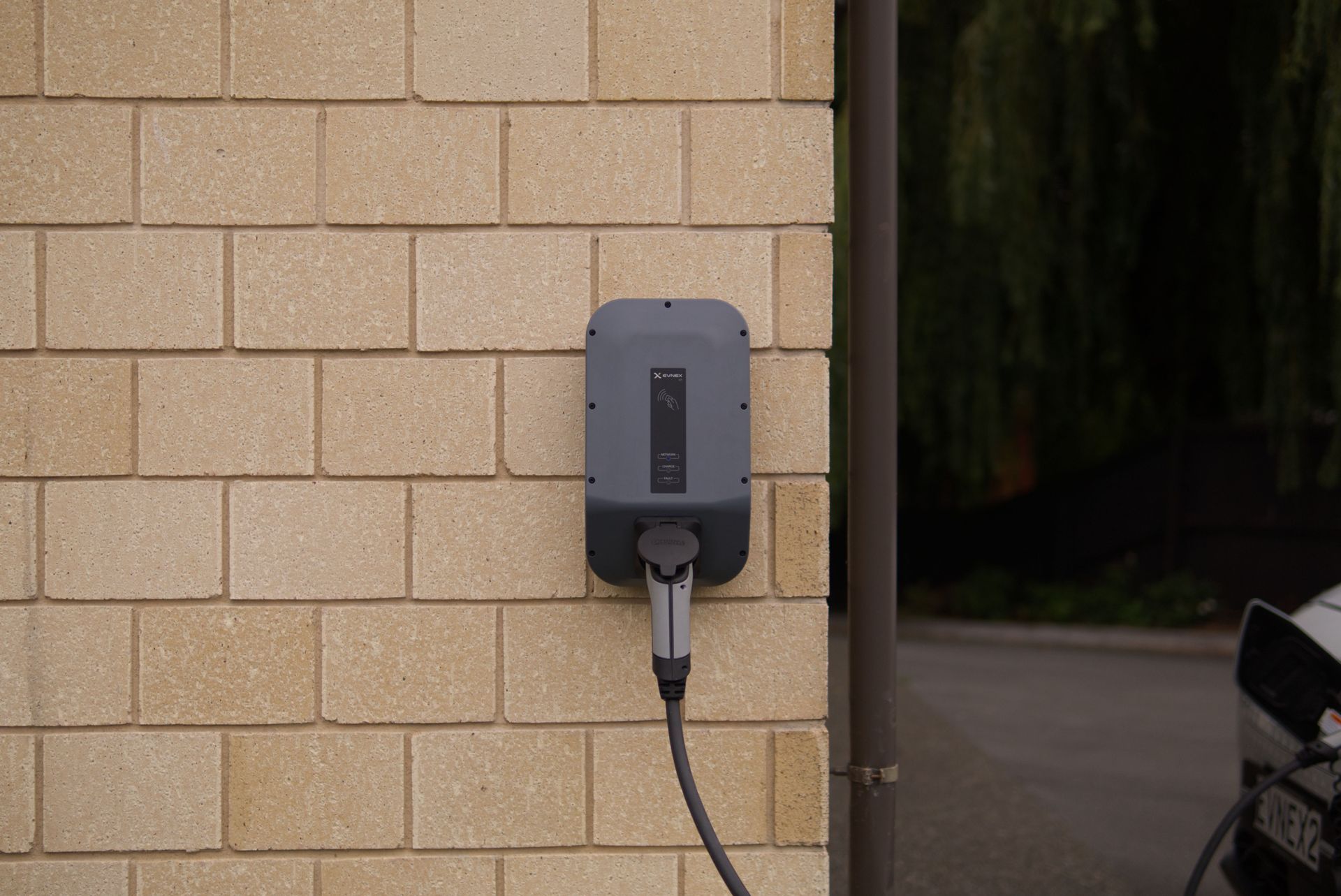
The installation covers the dedicated breaker, the wiring run from the panel to the charger location, charger mounting, and a full test of the circuit before the job is signed off. Whether the charger unit itself is included in the quote or supplied by the homeowner is confirmed upfront, because that affects the installation sequence and any compatibility considerations with the chosen mounting location. If a load calculation reveals the panel needs to be upgraded before the circuit can be added, that work is quoted together so the scope is complete rather than revised after the crew is already on-site.
Submit a panel photo or schedule an on-site review to get an accurate quote that reflects your home's actual capacity and charger placement requirements.
A Level 2 charger running on a 240-volt, 40-amp dedicated circuit draws a continuous load that must be factored against everything else the panel serves. The National Electrical Code treats EV charger circuits as continuous loads, which means the breaker must be sized at 125 percent of the charger's rated draw—a 32-amp charger requires a 40-amp breaker, not a 32-amp one. In a panel where most slots are already occupied and the calculated load is near the service rating, adding that circuit without a load calculation first creates a situation where the panel is operating beyond its rated capacity under normal household conditions.
Once the circuit is installed and tested, the charger delivers a consistent charge rate without relying on a standard 120-volt outlet that would take three to four times as long to reach the same state of charge. The dedicated circuit means the charger isn't competing with other loads on a shared breaker, which is what causes overnight charging to trip breakers in homes where a temporary 120-volt setup was tried first. Dorado Electrical Solutions tests the completed circuit at full draw before closing the job.
The permit for an EV charger circuit is pulled before installation and inspected by the city after completion, which is a required step that also produces documentation useful when selling the home or claiming utility rebates. Rebate eligibility through SDG&E typically requires a licensed contractor installation with a closed permit, so that documentation has direct practical value beyond code compliance.
Common Questions About EV Charger Installation
The questions below address how EV charger installation is scoped and performed—what the assessment covers, what the wiring work involves, and what determines whether additional electrical work is needed first.
What does the panel review check for before the charger circuit is quoted?
The review confirms the panel's total service rating, the number of available breaker slots, and the existing calculated load across all circuits. In older San Diego homes, it is also common to find tandem breakers occupying slots that appear open, which affects how many circuits can realistically be added without modifying the panel.
How is the wiring route from the panel to the charger location determined?
The route is planned based on the shortest practical path through accessible framing or conduit runs, with the garage wall or exterior mounting location as the endpoint. In homes where the panel is on an interior wall and the garage is on the opposite side of the house, the run may require going through the attic or along an exterior wall with weatherproof conduit.
When does an EV charger installation require a panel upgrade first?
A panel upgrade is required when the existing service is too small to support the additional continuous load, or when there are no available breaker slots for a dedicated double-pole breaker. Both conditions are identified during the load review, which is why that step happens before the quote is finalized rather than after the crew arrives.
What is included in the installation test before the job is closed?
The circuit is energized and the charger is tested at its rated output to confirm the breaker holds under load, the voltage at the outlet or hardwired connection is within spec, and the charger communicates correctly with a test vehicle or the charger's self-diagnostic mode if the unit includes one.
Why does the charger mounting location affect the installation scope?
The distance from the panel, the wall material at the mounting point, and whether the installation is indoors or exposed to weather all affect conduit type, wire gauge, and box selection. An outdoor installation in San Diego requires weatherproof-rated conduit and a NEMA 4 or NEMA 3R enclosure at the charger connection point, which is a different material set than an interior garage installation.
Dorado Electrical Solutions also installs EV chargers in Chula Vista, Bonita, La Mesa, San Carlos, and Coronado. To get a quote that covers both the charger circuit and any panel work your home requires, call Dorado Electrical Solutions at (951) 454-8624.