Old Wiring Replaced Where It Needs to Be
Rewiring in San Diego for homes with two-prong circuits, aluminum branch wiring, or cloth-insulated runs
Homes built before 1960, and many from the following decade, were wired with materials and methods that were acceptable at the time but no longer meet current safety standards or support modern loads. Dorado Electrical Solutions approaches rewiring by assessing the existing system first—panel, circuits, and access points—so the work replaces what needs replacing rather than defaulting to a whole-house replacement when targeted work is sufficient. The owner brings 19 years of field experience to that assessment, which is the step that determines scope and prevents a project from being priced larger than the home actually requires.
Pre-1960s homes in older San Diego neighborhoods, including Carrington and Lemon Grove, commonly contain cloth-insulated wiring where the insulation has become brittle over decades and no longer provides reliable protection at connections and bends. Aluminum branch circuit wiring from the late 1960s and early 1970s presents a different issue—aluminum expands and contracts more than copper, which causes connections to loosen over time and creates arcing conditions at outlets and switches. Two-prong ungrounded circuits are the most visible indicator that a home's wiring predates the ground requirement, and they also signal that the wiring behind the walls may not have been touched since the original installation.
Request a free inspection to identify which circuits require replacement and get a quote for targeted or full rewiring based on what the assessment finds.
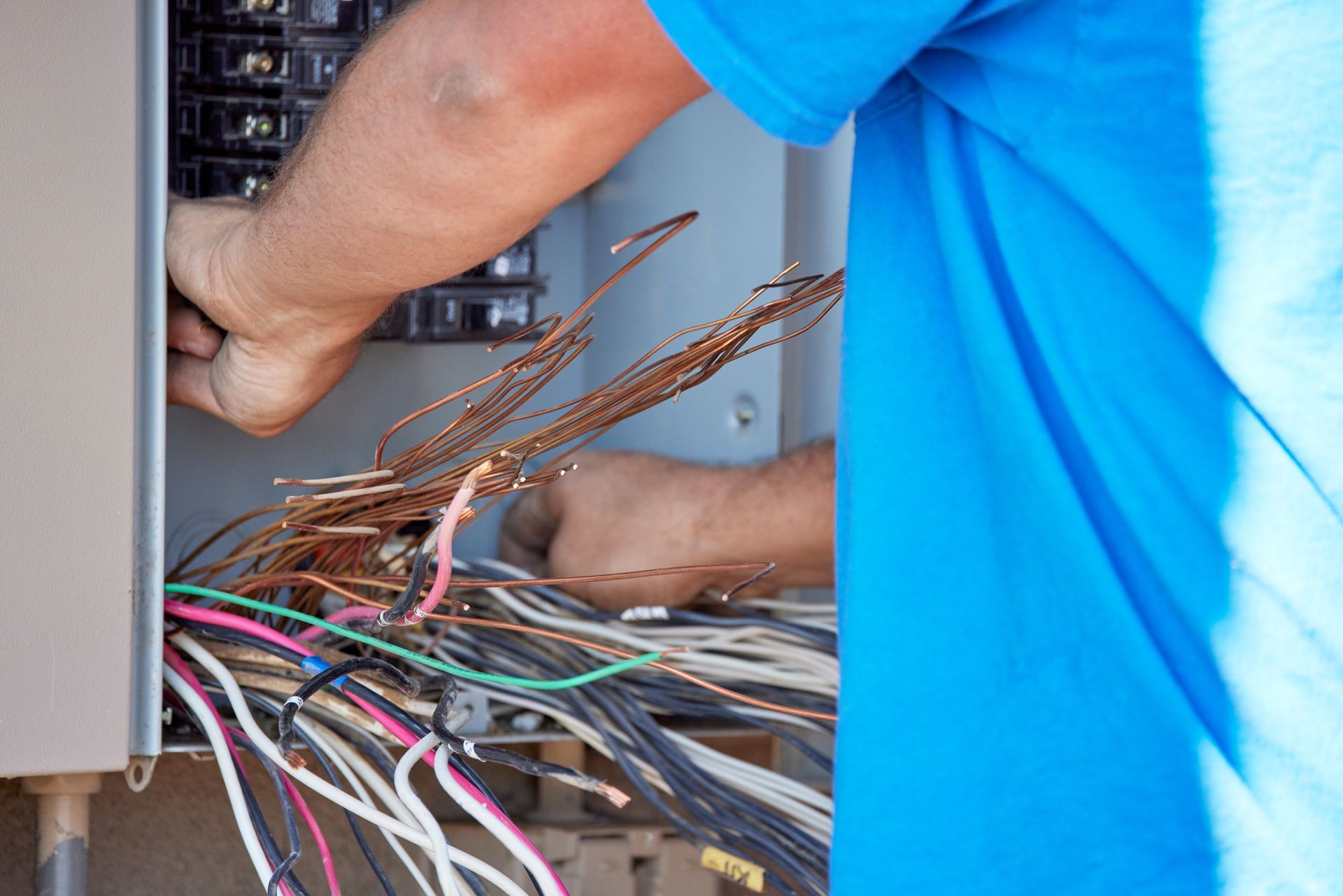
A rewire begins with inspecting the panel, tracing the existing circuit routes, and confirming which sections of wiring are original and which have already been updated in previous work. That inspection determines whether the home needs specific circuits replaced—a kitchen that still runs on aluminum branch wiring, for example, or a bedroom wing with cloth-insulated runs—or whether the condition is widespread enough that working circuit by circuit costs more than running new wire throughout. In finished walls, access is a central planning question: new circuits are typically fished through existing cavities where possible, and in areas where framing blocks access, small openings are made and patched. Plaster or drywall repair after rewiring is a separate scope item that should be confirmed in the quote before work begins.
After the new circuits are run and inspected, outlets and switches in the affected areas are replaced with grounded devices, and every outlet that is now on a grounded circuit tests correctly with a plug-in tester. Circuits that previously tripped under normal use because aluminum connections had loosened at the outlet terminals no longer do so. Dorado Electrical Solutions coordinates the permit inspection, which closes the record on the replaced wiring and confirms the new circuits meet current code.
Homes with aluminum branch circuit wiring that are not being fully rewired have an alternative path: AFCI breakers and listed aluminum-to-copper pigtail connectors at each device can bring those circuits into compliance without pulling new wire. Whether that approach is appropriate depends on the condition of the existing aluminum conductors, which the inspection confirms. Both options are explained during the assessment so the scope decision is based on what the home actually has rather than a default recommendation.
What Property Owners Ask About Rewiring Work
The questions below address how rewiring is assessed, how the work proceeds through finished walls, and what the inspection covers once the new circuits are in place.
How does the inspection determine which circuits need to be replaced?
The inspection checks the wiring type at accessible points—inside the panel, at outlet and switch boxes, and in the attic or crawlspace where wiring is exposed. Cloth insulation that has become brittle and cracked is identified visually; aluminum branch wiring is identified by the wire markings stamped on the insulation jacket; two-prong circuits are confirmed by testing outlets and tracing the circuit back to the panel.
What happens when new wire needs to pass through a finished wall in an older San Diego home?
In homes with plaster walls over wood lath, which is common in pre-1960s Carrington and similar neighborhoods, fishing wire through existing cavities requires a longer fish tape and more careful probe work than drywall construction, because the lath creates irregular obstacles. Where a cavity is fully blocked, a small access opening is cut, the obstruction is cleared or worked around, and the opening is patched as a separate step.
Why does aluminum branch circuit wiring create connection problems at outlets and switches?
Aluminum expands and contracts with heat cycling more than copper does, and the screws on standard outlets and switches are rated for copper. Over years of expansion and contraction, aluminum conductors work loose from those terminals, creating high-resistance connections that generate heat and can arc. Devices rated AL-CU or CO-ALR are required for aluminum terminations and use screw materials that maintain a tighter connection over time.
What permit and inspection steps are involved in a rewiring project?
A permit is required for rewiring work in San Diego, and the inspection covers the new circuit wiring, connections at the panel, outlet and switch device installations, and grounding. Inspections typically occur in stages—a rough-in inspection before walls are closed, and a final inspection once all devices and covers are installed—so the sequence of the work is planned around those inspection windows.
When the rewiring is complete, how do you confirm all circuits are correct before the job closes?
Each replaced circuit is tested for continuity, correct polarity, and ground integrity using a circuit tester at every outlet and switch location. Breakers are labeled in the panel to match the circuits they protect, and the completed panel directory is reviewed with the homeowner before the crew leaves the property.
Dorado Electrical Solutions also performs rewiring in Chula Vista, Bonita, La Mesa, San Carlos, and Coronado. To start with an inspection of your existing wiring and a quote limited to what the assessment finds, call Dorado Electrical Solutions at (951) 454-8624.